

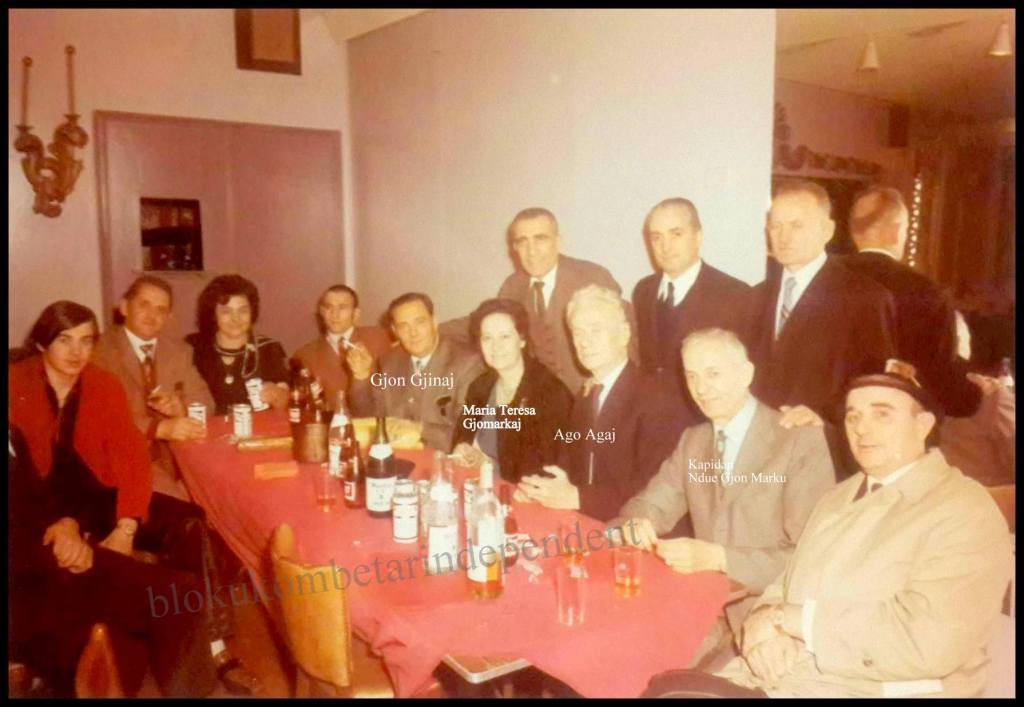
Gjon Gjinaj was born on February 1, 1907 in Bazë, Malësia e Madhe, Albania. After completing four years at the Officers’ School in Tirana, he served as a lieutenant in the Royal Albanian Army from 1931 to 1939. During the Italian occupation (1940–1943), he was mobilized into the Italian Army and stationed in Kruja.
In 1943, following the Italian capitulation, he returned to the mountains and joined the nationalist anti-communist resistance. A loyal follower of Kapidan Mark Gjon Marku since 1945, Gjon rapidly emerged as one of the most trusted and capable commanders in Mirdita, renowned for his courage and deep knowledge of the region’s terrain.
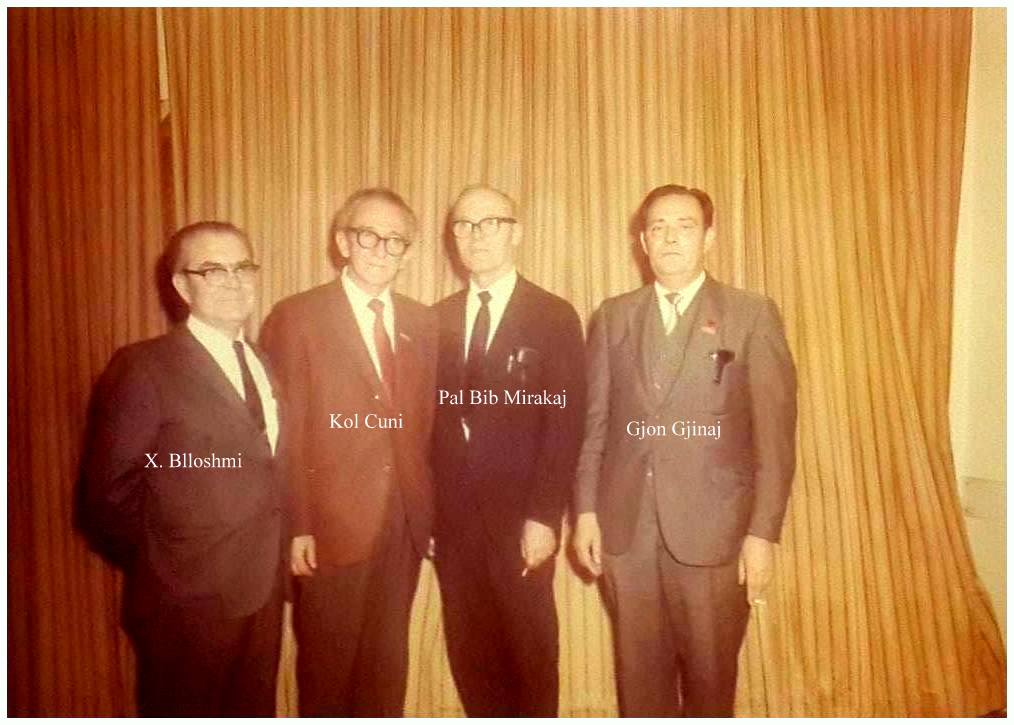
In 1949 he was recruited by Western intelligence services and became a founding member of Bloku Kombetar Independent (BKI – Independent Bloc). On 28 December 1949 he led the second BKI parachute mission into Albania, commanding a nine-man team dropped into Qafë Kombit forest in Fan, Mirdita. The group consisted of:
- Gjon Gjinaj
- Kol “Nik” Quni (chairman and radio operator)
- Zef Luka
- Pashk Letaj
- Ndue Frisku
- Mirash Marku
- Bardhok Gjeta
- Nikoll Nika
- Peter Gjoci (radio operator)
Over the following two years Gjon led this and subsequent teams in sustained guerrilla operations. Among the most significant engagements under his command were:
- The Battle of Zëpë – 2 December 1950
- The Battle of Munella – 25 April 1951
The letter below was read to the nationalist fighters as soon as they were assembled by Gjon Gjinaj. It was a message from Kapidan Ndue Gjon Marku to his friends.

After the collapse of organized resistance in the north, Gjon evaded capture inside Albania until late 1951, when he was forced to flee across the border to Yugoslavia. He was immediately detained and spent the next ten years in Yugoslav camps and prisons:
- 1951–1953: Tetovo camp
- 1953–1960: Brus, Serbia
- March 1960 – May 1961: Gerovo
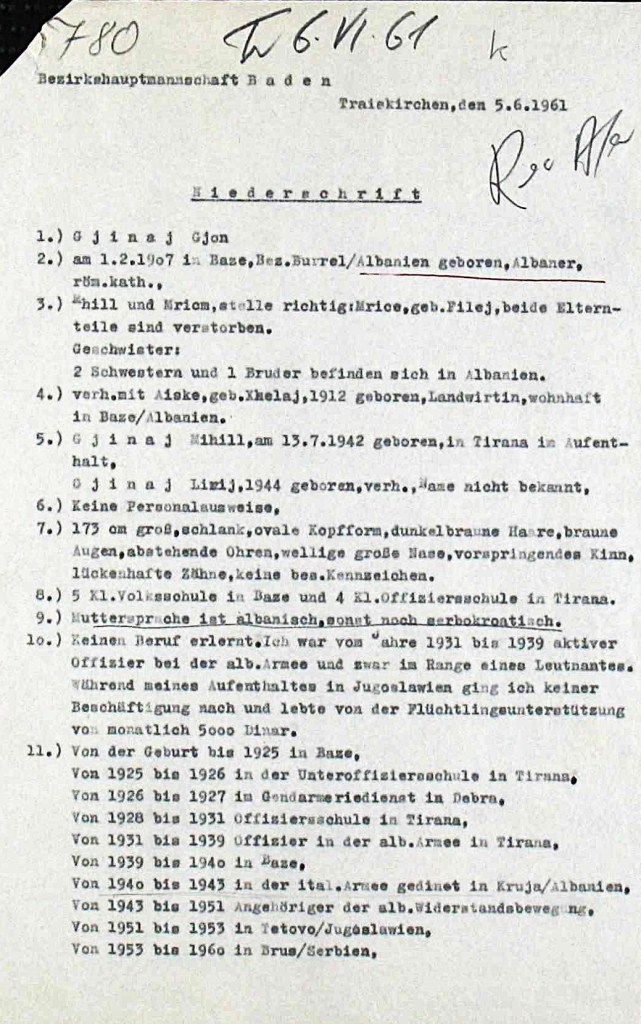
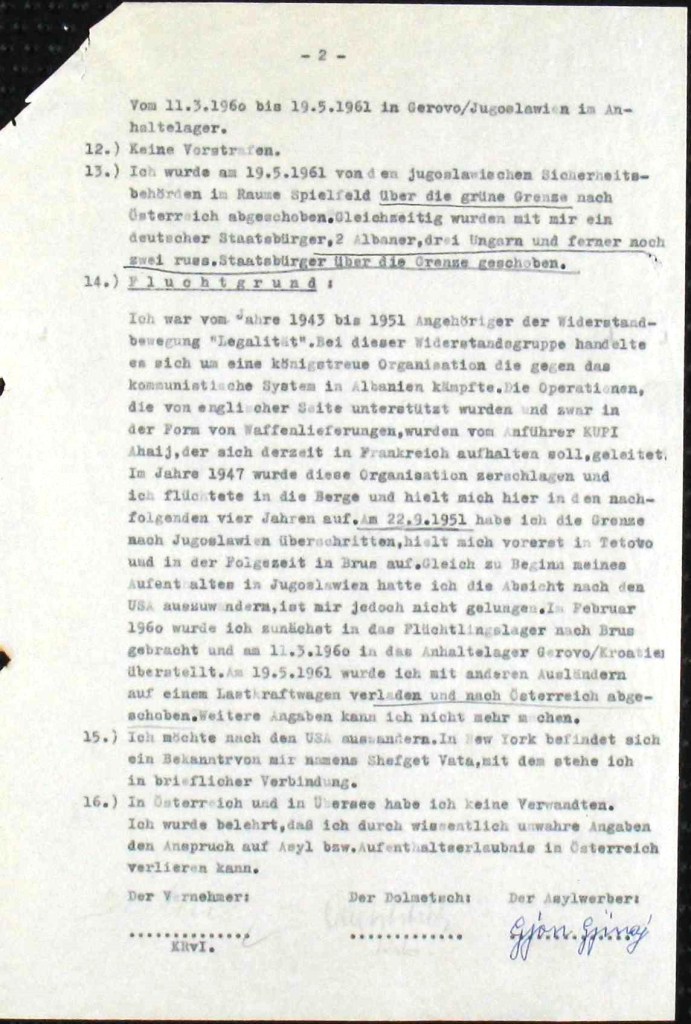
On May 19, 1961 he was deported by the Yugoslav security authority across the border to Austria in the Spielfeld area. His reason for fleeing Albania in his own words: 1“From 1943 to 1951 I was a member of the resistance movement “Legalitat”. This resistance group was a royalist organization that fought against the communist system in Albania. The operations, which were supported by the British in the form of arms shipments, were led by Kupi Ahaij, who is currently believed to be in France. In 1947, this organization was dismantled and I fled to the mountains, where I remained for the next four years. On September 22, 1951, I crossed the border into Yugoslavia, I intended to emigrate to the USA, but I was unsuccessful. In February 1960, I was first taken to the refugee camp in Brus and on March 11, 1960, transferred to the detention Camp in Gerovo, Croatia. On may 19, 1961, I was loaded onto a truck with other foreigners and deported to Austria. I cannot provide any further information. I would like to go to the USA. I have an acquaintance in New York named Shefget Vata, with whom I correspond. I have no relatives in Austria or overseas. I have been informed that knowingly providing false information could result in the loss of my right to asylum or residence permit in Austria.” Baden District Authority, Traiekirchen, June 5, 1961
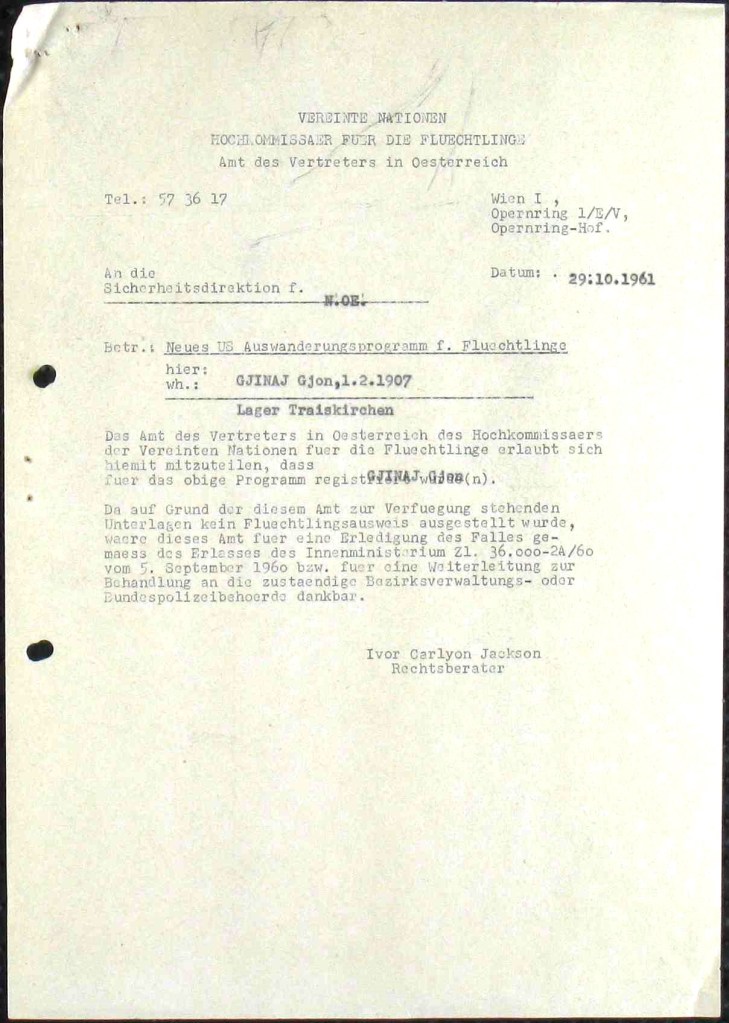
Throughout 1961 2 Gjon repeatedly applied for political refugee status to emigrate to the West. Although formal refugee recognition was never granted due to diplomatic and political complications, in October 1961 authorities finally allowed him to apply for a foreigner’s visa for the United States. He departed shortly thereafter and settled in the United States as a political exile.
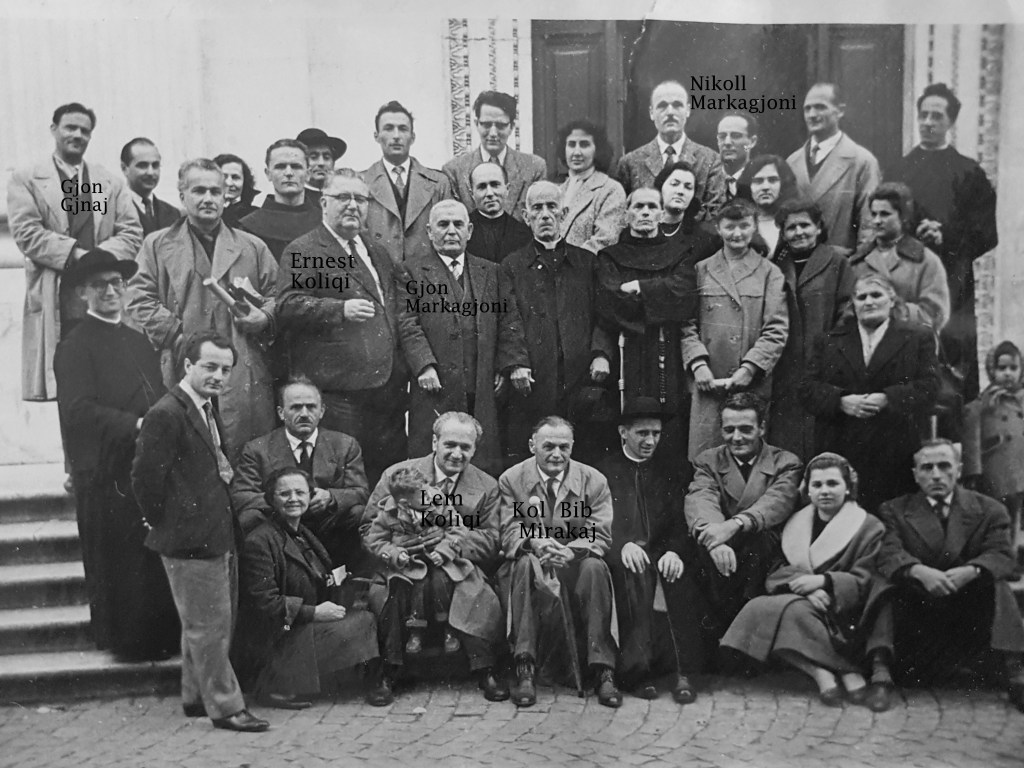
Gjon Gjinaj died in New York City on December 23, 1977 under a cloud of suspicion; to this day it remains an unsolved murder. He was a great hero and a great personal friend of the family of Kapidan Ndue Gjon Marku.


 BLOKU KOMBTAR INDEPENDENT